Professor Alan Robock, Rutgers University
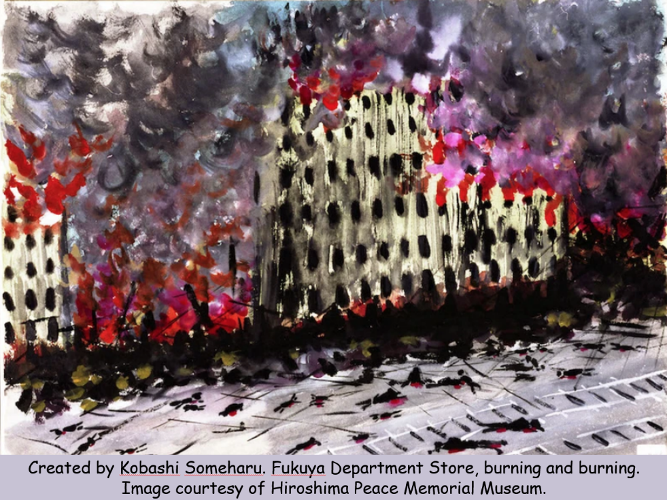
A nuclear war between any two nations, such as India and Pakistan, with each country using 50 Hiroshima-sized atom bombs as airbursts on urban areas, could inject 5 Tg of soot from the resulting fires into the stratosphere, so much smoke that the resulting climate change would be unprecedented in recorded human history. Our climate model simulations find that the smoke would absorb sunlight, making it dark, cold, and dry at Earth’s surface and produce global-scale ozone depletion, with enhanced ultraviolet radiation reaching the surface. The changes in temperature, precipitation, and sunlight from the climate model simulations, applied to crop models show that these perturbations would reduce global agricultural production of the major food crops for a decade. Since India and Pakistan now have more nuclear weapons with larger yields, and their cities are larger, even a war between them could produce emissions of 27 or even 47 Tg of soot.
My current research project, being conducted jointly with scientists from the University of Colorado, Columbia University, and the National Center for Atmospheric Research, is examining in detail, with city firestorm and global climate models, various possible scenarios of nuclear war and their impacts on agriculture and the world food supply. Using six crop models we have simulated the global impacts on the major cereals for the 5 Tg case. The impact of the nuclear war simulated here, using much less than 1% of the global nuclear arsenal, could sentence a billion people now living marginal existences to starvation. By year 5, maize and wheat availability would decrease by 13% globally and by more than 20% in 71 countries with a cumulative population of 1.3 billion people. In view of increasing instability in South Asia, this study shows that a regional conflict using <1% of the worldwide nuclear arsenal could have adverse consequences for global food security unmatched in modern history. The greatest nuclear threat still comes from the United States and Russia. Even the reduced arsenals that remain in 2021 due to the New START Treaty threaten the world with nuclear winter. The world as we know it could end any day as a result of an accidental nuclear war between the United States and Russia. With temperatures plunging below freezing, crops would die and massive starvation could kill most of humanity.
As a result of international negotiations pushed by civil society led by the International Campaign to Abolish Nuclear Weapons (ICAN), and referencing our work, the United Nations passed the Treaty on the Prohibition of Nuclear Weapons (TPNW) on July 7, 2017. On December 10, 2017, ICAN accepted the Nobel Peace Prize “for its work to draw attention to the catastrophic humanitarian consequences of any use of nuclear weapons and for its ground-breaking efforts to achieve a treaty-based prohibition of such weapons.” The TPNW came into force on January 22, 2021, after 50 nations had ratified it. Will humanity now pressure the United States and the other eight nuclear nations to sign this treaty?
Professor Alan Robock
Department of Environmental Sciences
Rutgers University
New Brunswick, NJ, USA
E-mail: robock@envsci.rutgers.edu
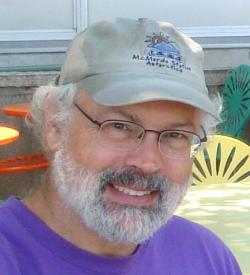 Dr. Alan Robock is a Distinguished Professor of climate science in the Department of Environmental Sciences at Rutgers University. He graduated from the University of Wisconsin, Madison, in 1970 with a B.A. in Meteorology, and from the Massachusetts Institute of Technology with an S.M. in 1974 and Ph.D. in 1977, both in Meteorology. Before graduate school, he served as a Peace Corps Volunteer in the Philippines. He was a professor at the University of Maryland, 1977-1997, and the State Climatologist of Maryland, 1991-1997, before coming to Rutgers in 1998. Prof. Robock has published more than 400 articles on his research in the area of climate change, including more than 260 peer-reviewed papers. His areas of expertise include climate intervention (also called geoengineering), climatic effects of nuclear war, and effects of volcanic eruptions on climate.
He serves as Associate Editor of Reviews of Geophysics, the most highly-cited journal in the Earth Sciences. His honors include being a Fellow of the American Geophysical Union, the American Meteorological Society (AMS), and the American Association for the Advancement of Science, and a recipient of the AMS Jule Charney Award. Prof. Robock was a Lead Author of the most recent Fifth Assessment Report of the Intergovernmental Panel on Climate Change (awarded the Nobel Peace Prize in 2007). In 2017 the International Campaign to Abolish Nuclear Weapons was awarded the Nobel Peace Prize for “for its work to draw attention to the catastrophic humanitarian consequences of any use of nuclear weapons and for its groundbreaking efforts to achieve a treaty-based prohibition of such weapons” based partly on the work of Prof. Robock.
Meeting Agenda
- 11:30 a.m. Lunch on your own at home. 😊. You may sign into Zoom and see/talk to your colleagues prior to the beginning of the meeting.
- 12:00 noon Meeting begins.
- 1:00 End of presentation and questions.